Product Description
As follows linear guide&block are in stock:(compatible with HIWIN linear guide)
| GH series rail | GHR15,GHR20,GHR25,GHR30,GHR35,GHR45 |
| GHH..CA square block | GHH15CA,GHH20CA,GHH25CA,GHH30CA,GHH35CA,GHH45CA |
| GHW..CC flange block | GHW15CC,GHW20CC,GHW25CC,GHW30CC,GHW35CC,GHW45CC |
| GHH..HA lengthen | GHH20HA,GHH25HA,GHH30HA,GHH35HA,GHH45HA |
| GHW..HC lengthen | GHW15HC,GHW20HC,GHW25HC,GHW30HC,GHW35HC,GHW45HC |
| GE low assembly rail | GER15,GER20,GER25 |
| GEH..CA | GEH15CA,GEH20CA,GEH25CA |
| GEH..SA | GEH15SA,GEH20SA |
| GEW..CA | GEW15CA,GEW20CA,GEW25CA |
| MGN rail | MGNR5,MGR7,MGR9,MGR12,MGR15 |
| MGN..C | MGN5C,MGN7C,MGN9C,MGN12C,MGN15C |
| MGN..H | MGN7H,MGN9H,MGN12H,MGN15H |
| MGW rail | MGW7,MGW9,MGW12,MGW15 |
| MGW..C | MGW7C,MGW9C,MGW12C,MGW15C |
| MGW..H | MGW7H,MGW9H,MGW12H,MGW15H |
Diagram of the working principle of the rail slider
Rail structure diagram
Selection of series
GH series:Grinding Miling ,and riling machine,Lathe. Electric discharge machine,Wirecutting machine,Wood cutting machine,Precision measure equipment,Machin-e center
GE series :Automatic equipment,Semiconductor equipment,Laser engraving mac-hine,High speed transfer machine,Packing machine,Medical equipment
QE/QH series :High precision measure equipment,Semiconductor
equipment,Automatic equipment, can be widely aplied in high-tech industry required high speed,low noise,low dust generation
GR senies :CNC machining centers,Heavy duty cutting machine,CNC ginding Machine
GMN/GMW Series : Miniature device,semiconductor equipment,3Dprinter
Detailed Photos
Company Profile
Certifications
Our Advantages
Service:
1,Our Team:
We have experienced and qualified team of marketing and sales representatives to serve our valued customers with the finest products and unsurpassed service.And have professional engineers team to assessment and development the new precision products,and make the OEM customized more easily,experienced QC team to test the products quaity ensure the goods quality before delivery out.
2,Our products:
Quality is the life .We use only the best quality material to ensure the precision of our
Product.All products we sold out are strictly selected and tested by our QC department.
3,Payment:
We accept payment via TT (Bank transfer), L/C,Western Union.Paypal and other payment.
4,Shipping method:
Including DHL, UPS, TNT, FEDEX,EMS, Airfreight and by Sea,as customer required.
To get sample or price list of linear gudies, please contact us.
/* March 10, 2571 17:59:20 */!function(){function s(e,r){var a,o={};try{e&&e.split(“,”).forEach(function(e,t){e&&(a=e.match(/(.*?):(.*)$/))&&1
| Application: | Workshop Crane |
|---|---|
| Material: | Stainless Steel and Bearing Steel |
| Structure: | Tyre Crane |
| Installation: | Special Crane |
| Driven Type: | Step Motor |
| Carrying Capacity: | Middle-Level |
| Samples: |
US$ 10/Piece
1 Piece(Min.Order) | |
|---|
| Customization: |
Available
| Customized Request |
|---|
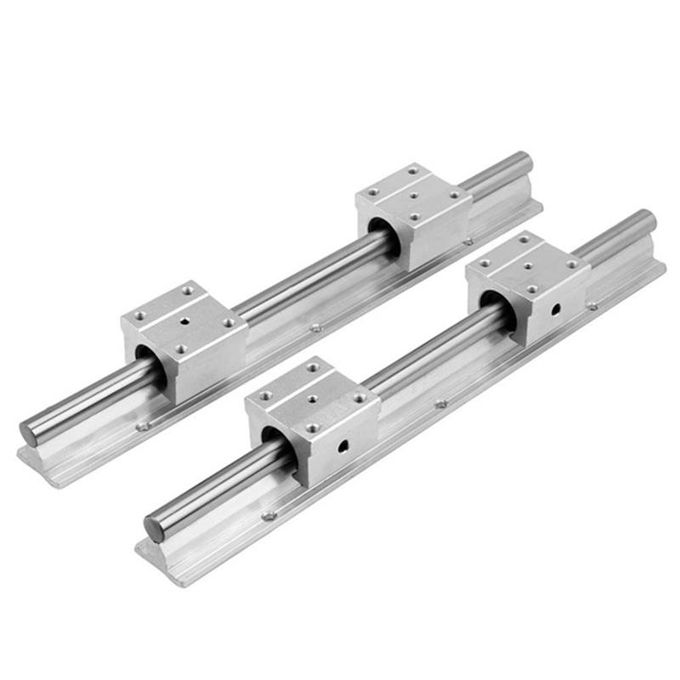
Differences Between Linear Ball Bearings and Linear Roller Bearings
Linear ball bearings and linear roller bearings are two distinct types of linear bearings, each with its own design and characteristics. Here’s how they differ and when they are preferred:
- 1. Design:
Linear ball bearings use ball bearings to provide rolling motion along the shaft. Linear roller bearings, on the other hand, use cylindrical or needle rollers for motion. Roller bearings have a larger contact area, distributing the load over a broader surface.
- 2. Load Capacity:
Linear roller bearings typically have a higher load-carrying capacity compared to linear ball bearings. This makes them suitable for applications with heavier loads and greater force requirements.
- 3. Friction and Smoothness:
Linear ball bearings offer lower friction and smoother motion due to the point contact between the balls and the shaft. Roller bearings may have slightly higher friction but can handle larger loads without sacrificing smoothness.
- 4. Precision and Accuracy:
Linear ball bearings are often preferred for applications requiring high precision and accuracy. Their point contact provides precise positioning and repeatability, making them suitable for tasks like CNC machining and optical systems.
- 5. Noise and Vibration:
Linear ball bearings tend to generate less noise and vibration due to their smoother rolling action. Roller bearings may produce slightly more noise but are still used in applications where noise is not a critical factor.
- 6. Speed:
Linear ball bearings are well-suited for high-speed applications due to their low friction and smooth motion. Roller bearings are also capable of high speeds but may have slightly different characteristics.
- 7. Cost:
Linear ball bearings are often more cost-effective for lower-load and precision applications. Linear roller bearings may be preferred for heavy-duty applications, which may justify their higher cost.
- 8. Application Scenarios:
Linear ball bearings are commonly used in applications where precision, smooth motion, and accuracy are paramount, such as in CNC machinery, 3D printers, and optical systems. Linear roller bearings excel in applications with higher loads, such as heavy machinery, material handling, and industrial automation.
In summary, the choice between linear ball bearings and linear roller bearings depends on the specific requirements of the application. Each type has its strengths and weaknesses, and selecting the right type ensures optimal performance and longevity.
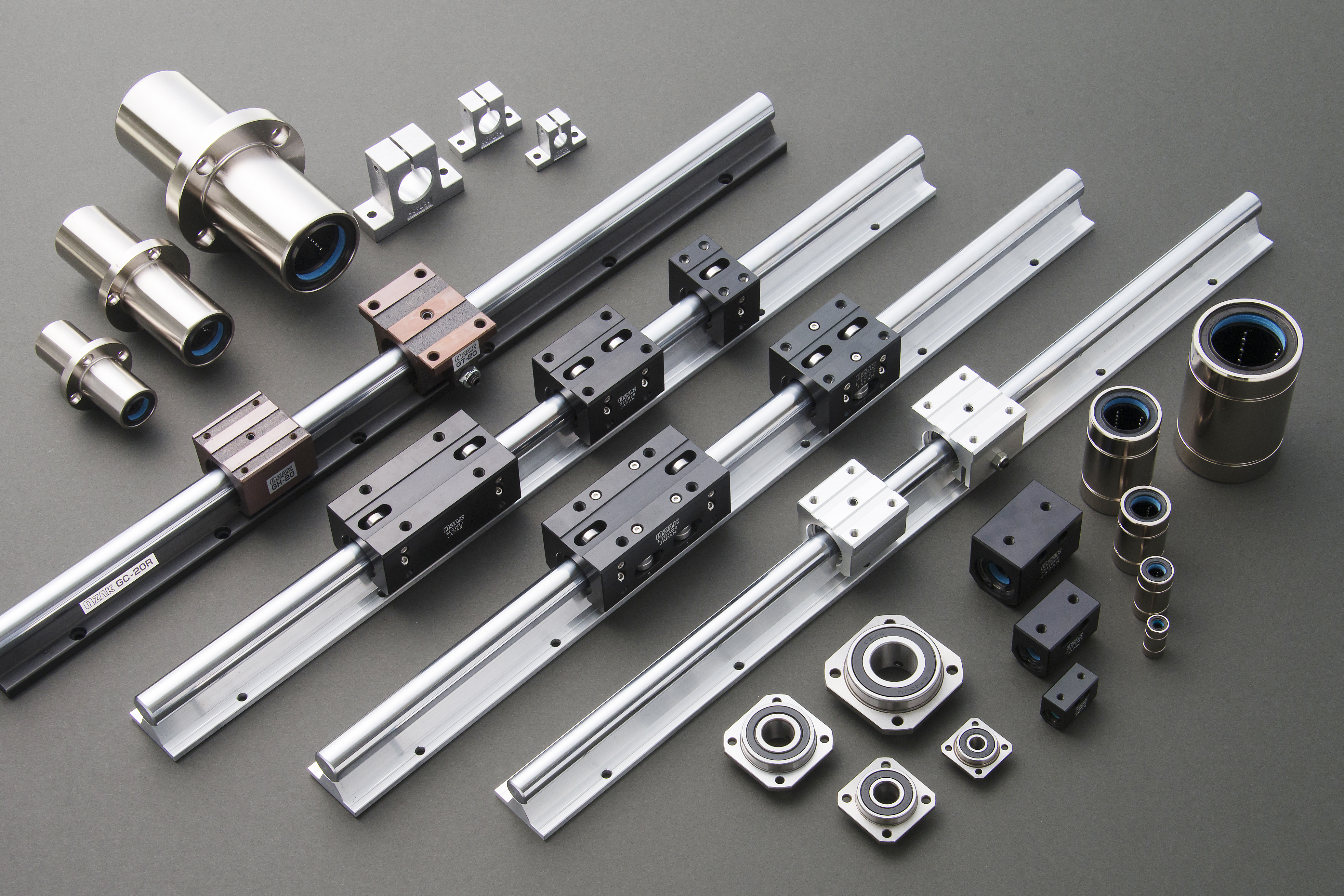
Enhancing 3D Printers and Additive Manufacturing with Linear Bearings
Linear bearings play a crucial role in the efficient and precise operation of 3D printers and additive manufacturing processes. Here’s how they contribute to these technologies:
- Precise Motion Control:
Linear bearings provide smooth and accurate linear motion control, ensuring precise positioning of the print head or build platform. This precision is essential for creating intricate and detailed 3D printed objects.
- High Repeatability:
Linear bearings offer high repeatability, enabling the printer to consistently recreate complex geometries layer by layer. This is crucial for producing parts with consistent quality and dimensions.
- Reduced Vibration and Wobble:
The smooth motion provided by linear bearings minimizes vibrations and wobbling during printing, leading to smoother surface finishes and improved print quality.
- High-Speed Printing:
Linear bearings can handle high speeds, allowing 3D printers to operate at faster print speeds without sacrificing accuracy. This is beneficial for reducing overall print time.
- Compact Design:
Many linear bearings have a compact and space-efficient design, which is important for fitting within the confined spaces of 3D printers while maintaining the required range of motion.
- Low Friction and Wear:
Linear bearings are designed to minimize friction and wear, leading to longer lifespan and reduced maintenance requirements. This is especially important in additive manufacturing where continuous operation is desired.
- Smooth Layer-by-Layer Building:
In additive manufacturing, linear bearings enable precise movement of the build platform or print head, ensuring that each layer is accurately aligned and built upon the previous layer.
- Complex Geometries:
Linear bearings enable 3D printers to create complex and intricate geometries that require precise control over the movement of the print head and build platform.
Overall, linear bearings contribute to the success of 3D printing and additive manufacturing by providing the necessary motion control, precision, and reliability needed to create high-quality and intricate 3D printed objects.
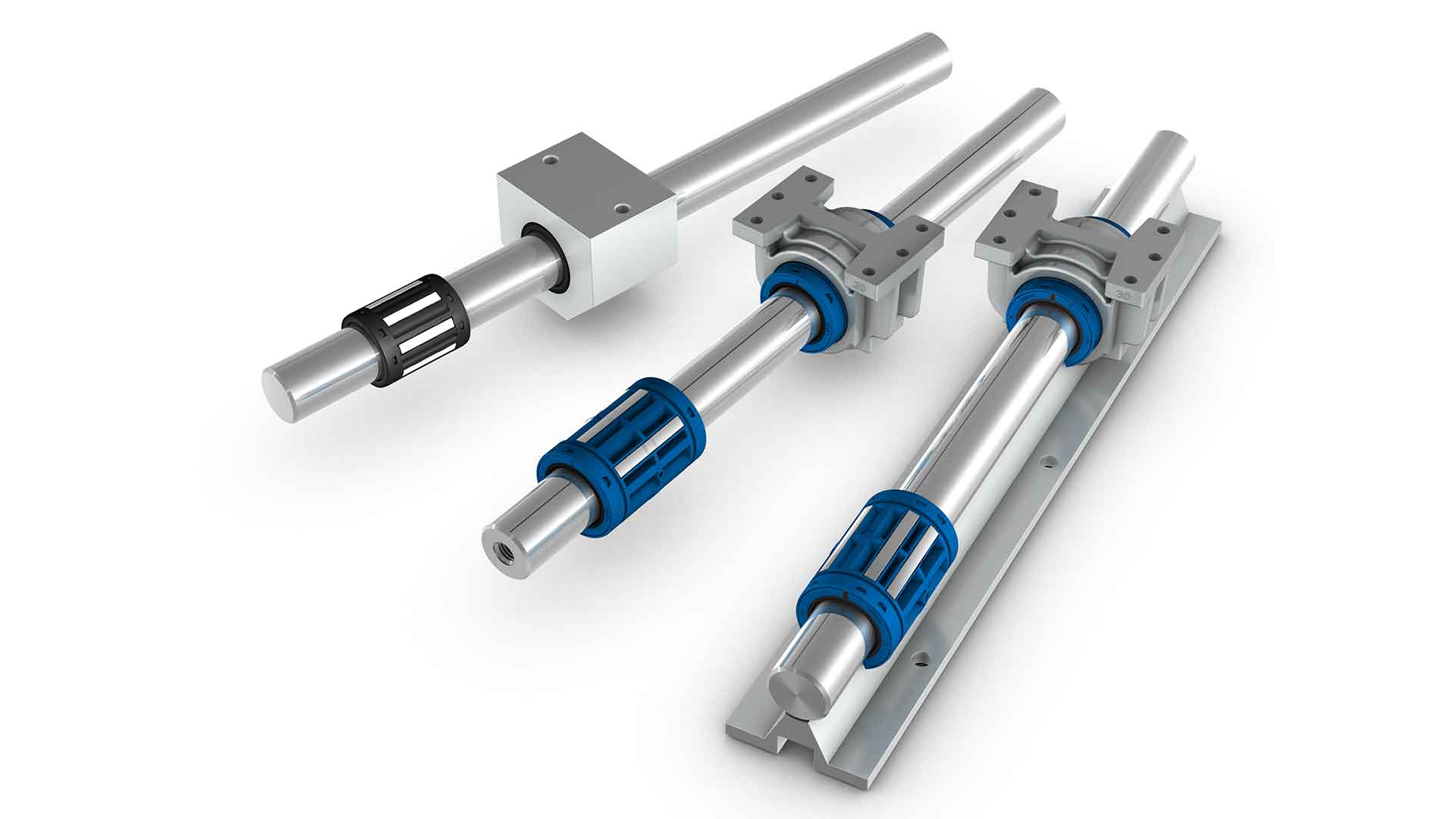
Examples of Crucial Motion Control Scenarios Using Linear Bearings
Linear bearings are crucial for achieving precise motion control in various scenarios where accuracy, repeatability, and smooth movement are essential. Here are some examples:
- 1. CNC Machining:
In computer numerical control (CNC) machines, linear bearings enable precise movement of the cutting tool or workpiece along multiple axes. This accuracy is necessary to produce complex and intricate parts with tight tolerances.
- 2. Semiconductor Manufacturing:
In semiconductor fabrication equipment, linear bearings control the movement of wafers, masks, and other components with micron-level precision. This precision is vital for creating tiny circuits and microchips.
- 3. 3D Printing:
In 3D printers, linear bearings ensure accurate positioning of the print head and build platform. This accuracy is crucial for creating intricate and detailed 3D-printed objects.
- 4. Laser Cutting and Engraving:
Linear bearings are used in laser cutting and engraving machines to control the movement of the laser head. Precise motion ensures accurate cutting and engraving on various materials.
- 5. Microscopy:
In microscopy applications, linear bearings enable precise positioning of microscope stages and objectives. This accuracy is essential for capturing detailed images and conducting precise measurements.
- 6. Metrology and Inspection:
Linear bearings are crucial in metrology and inspection equipment for accurately measuring and inspecting parts. This ensures compliance with quality standards and specifications.
- 7. Optical Systems:
In optical systems, linear bearings control the movement of lenses, mirrors, and other optical components. Precise motion is essential for maintaining accurate focus and alignment.
- 8. Coordinate Measuring Machines (CMMs):
Linear bearings in CMMs allow accurate measurement of parts’ dimensions and geometries. Precise motion ensures reliable measurement results.
- 9. Aerospace and Defense Testing:
In aerospace and defense industries, linear bearings are used in testing equipment to simulate various conditions. Accurate motion control is crucial for testing components’ performance and durability.
These examples highlight the critical role of linear bearings in achieving precise motion control across industries. Whether in manufacturing, research, or testing, linear bearings ensure accurate and repeatable movement for optimal results.


editor by CX 2024-02-26