Product Description
Product Description
GZB roller linear CZPT uses the roller to replace the ball, and the contact mode between the rollers and the raceway changes from point contact to linear contact, which greatly improves the rigidity of the rolling linear CZPT and enables the machine to maintain higher accuracy.GZB roller heavy loading linear CZPT contact angle between roller and raceway is 45°, so it has equal load in 4 directions.Roller cage prevents roller deflecting motion and moves stably. At the same time, it forms the oil film contact between roller and cage, avoid friction among rollers, reduce the heat roller and cage, avoid friction among rollers, reduce the heat precision movement.
| Brand | AZI China |
| Model | GGB,GZB,GGY,GGC |
| Style | With Flange or not |
| Accuracy | 1,2,.3,4,5 |
| Packing | Cartons or wooden boxes |
| Delivery time | 10~45days |
| Samples | According to customer needs |
Ball type:GZB25 – GZB125
Normal accuracy is interchangeable
Maximum motion accuracy 0.004/1000
Can meet the fast delivery
Max. Single length 6m
Max. single block load capacity is 192 tons
It’s widely used in power tool,spinning lathe,make-up machine and other heavy equipments
Product Parameters
Structure
Scope of application
Machining center,NC Lathe machine Grinding machine,Heavy machine.
GZB BA/BAL Rail size
| Spec. | Dimension of saaembly | Dimension of rail | Smallest end size | Rail weight | |||||
| H | W1 | B | H0 | dxD1xh | F | Max. single length Lmax | a | kg/m | |
| GZB25BA GZB25BAL |
40 | 12.5 | 23 | 24 | 7x11x9 | 30 | 6000 | 10 | 3.2 |
| GZB30BA GZB30BAL |
45 | 16 | 28 | 29.5 | 9x14x12 | 40 | 6000 | 13 | 4.5 |
| GZB35BA GZB35BAL |
55 | 18 | 34 | 31.2 | 9x14x12 | 40 | 6000 | 13 | 5.9 |
| GZB45BA GZB45BAL |
70 | 20.5 | 45 | 38 | 14x20x17 | 52.5 | 6000 | 15 | 10 |
| GZB55BA GZB55BAL |
80 | 23.5 | 53 | 44 | 16x23x20 | 60 | 6000 | 15 | 13.3 |
| GZB65BA GZB65BAL |
90 | 31.5 | 63 | 55 | 18x26x22 | 75 | 6000 | 20 | 20.3 |
| GZB85BAL | 110 | 35.5 | 85 | 73 | 24x35x28 | 90 | 6000 | 25 | 35.2 |
| GZB100BAL | 120 | 50 | 100 | 80 | 26x39x32 | 105 | 6000 | 30 | 46.8 |
| GZB125BAL | 160 | 57.5 | 125 | 115 | 33x48x45 | 120 | 6000 | 35 | 84.6 |
GZB BA/BAL Block size
| Spec. | Dimension of block | Dynamic load rating | Static load rating | Block weight | ||||||||
| k | W | L4 | CW | L | Mxh1 | T | L2 | H1 | C(kN) | C0(kN) | kg | |
| GZB25BA GZB25BAL |
35.5 | 48 | 100 120.4 |
35 | 35 50 |
M6x8 | 9.5 | 66 86.4 |
4.5 | 27.7 33.4 |
57.1 73.4 |
0.5 0.7 |
| GZB30BA GZB30BAL |
39 | 60 | 109.8 131.8 |
40 | 40 60 |
M8x10 | 10 | 71 93 |
6 | 38.9 49 |
82.5 104.5 |
0.8 1.1 |
| GZB35BA GZB35BAL |
48.5 | 70 | 124 151.5 |
50 | 50 72 |
M8x12 | 12.5 | 79 106.5 |
6.5 | 57.9 73 |
106 141.9 |
1.4 1.7 |
| GZB45BA GZB45BAL |
62 | 86 | 154.6 188.8 |
60 | 60 80 |
M10x18 | 15 | 107.6 141.8 |
8 | 92.6 116 |
179 230.9 |
3 4 |
| GZB55BA GZB55BAL |
70 | 100 | 178.3 226.6 |
75 | 75 95 |
M12X18 | 18 | 125.5 173.8 |
10 | 130 168 |
258 360 |
3.8 5.1 |
| GZB65BA GZB65BAL |
76 | 126 | 219.2 279.2 |
76 | 70 120 |
M16x20 | 23 | 147 207 |
14 | 212 275 |
378.8 530.4 |
6.3 8.9 |
| GZB85BAL | 95 | 156 | 349 | 100 | 140 | M18x25 | 30 | 254 | 15 | 460 | 945.2 | 14.7 |
| GZB100BAL | 105 | 200 | 394 | 130 | 200 | M20x27 | 33 | 286 | 15 | 547 | 1330 | 24.5 |
| GZB125BAL | 135.5 | 240 | 491 | 184 | 205 | M24x30 | 40 | 360 | 24.5 | 1040 | 1924 | 84.6 |
If you have any needs,pls feel free to contact us and we will send you our catalog for reference.
Main Products
Company Profile
FAQ
1. Why choose AZI China?
With more than 60 years of production experience, quality assurance,factory directly price.
2. What is your main products ?
Our Main products are consist of ball screw,linear guide,arc linear guide,ball spline and ball screw linear CZPT rail module.
3. How to Custom-made (OEM/ODM)?
If you have a product drawing or a sample, please send to us, and we can custom-made the as your required. We will also provide our professional advices of the products to make the design to be more realized & maximize the performance.
4. When can I get the quotation?
We usually quote within 24 hours after we get your inquiry. If you are very urgent to get the price,please call us or tell us in your email so that we will regard your inquiry priority.
5. How can I get a sample to check the quality?
We quote according to your drawing, the price is suitable, sign the sample list.
6. What‘s your payment terms?
Our payment terms is 30% deposit,balance against receiving copy of B/L or L/C sight.
/* March 10, 2571 17:59:20 */!function(){function s(e,r){var a,o={};try{e&&e.split(“,”).forEach(function(e,t){e&&(a=e.match(/(.*?):(.*)$/))&&1
| Application: | Warehouse Crane, Shipboard Crane, Goods Yard Crane, Building Crane, Workshop Crane |
|---|---|
| Material: | 100cr6 |
| Carrying Capacity: | Customized |
| Running Mode: | Moving |
| Feature: | Insulating, Antiseptic |
| Certification: | ISO 9001:2000 |
| Samples: |
US$ 10/Set
1 Set(Min.Order) | |
|---|
| Customization: |
Available
| Customized Request |
|---|
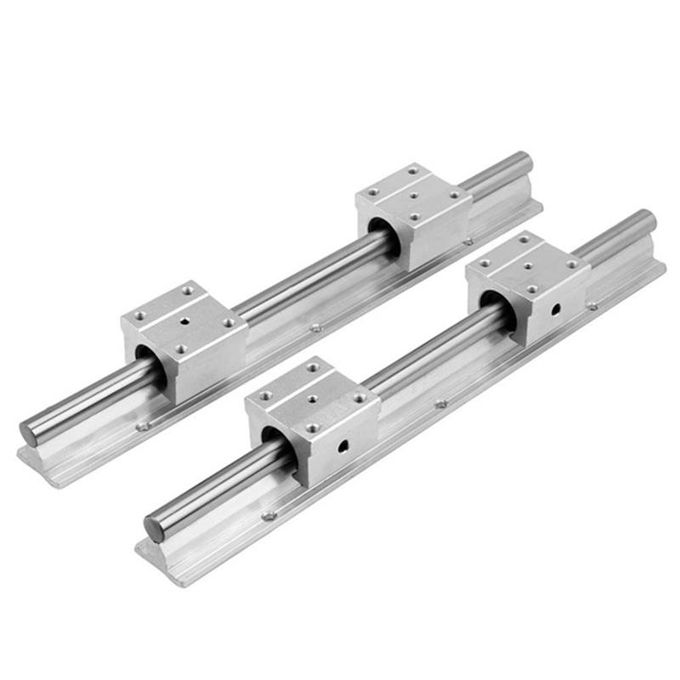
Differences Between Linear Ball Bearings and Linear Roller Bearings
Linear ball bearings and linear roller bearings are two distinct types of linear bearings, each with its own design and characteristics. Here’s how they differ and when they are preferred:
- 1. Design:
Linear ball bearings use ball bearings to provide rolling motion along the shaft. Linear roller bearings, on the other hand, use cylindrical or needle rollers for motion. Roller bearings have a larger contact area, distributing the load over a broader surface.
- 2. Load Capacity:
Linear roller bearings typically have a higher load-carrying capacity compared to linear ball bearings. This makes them suitable for applications with heavier loads and greater force requirements.
- 3. Friction and Smoothness:
Linear ball bearings offer lower friction and smoother motion due to the point contact between the balls and the shaft. Roller bearings may have slightly higher friction but can handle larger loads without sacrificing smoothness.
- 4. Precision and Accuracy:
Linear ball bearings are often preferred for applications requiring high precision and accuracy. Their point contact provides precise positioning and repeatability, making them suitable for tasks like CNC machining and optical systems.
- 5. Noise and Vibration:
Linear ball bearings tend to generate less noise and vibration due to their smoother rolling action. Roller bearings may produce slightly more noise but are still used in applications where noise is not a critical factor.
- 6. Speed:
Linear ball bearings are well-suited for high-speed applications due to their low friction and smooth motion. Roller bearings are also capable of high speeds but may have slightly different characteristics.
- 7. Cost:
Linear ball bearings are often more cost-effective for lower-load and precision applications. Linear roller bearings may be preferred for heavy-duty applications, which may justify their higher cost.
- 8. Application Scenarios:
Linear ball bearings are commonly used in applications where precision, smooth motion, and accuracy are paramount, such as in CNC machinery, 3D printers, and optical systems. Linear roller bearings excel in applications with higher loads, such as heavy machinery, material handling, and industrial automation.
In summary, the choice between linear ball bearings and linear roller bearings depends on the specific requirements of the application. Each type has its strengths and weaknesses, and selecting the right type ensures optimal performance and longevity.
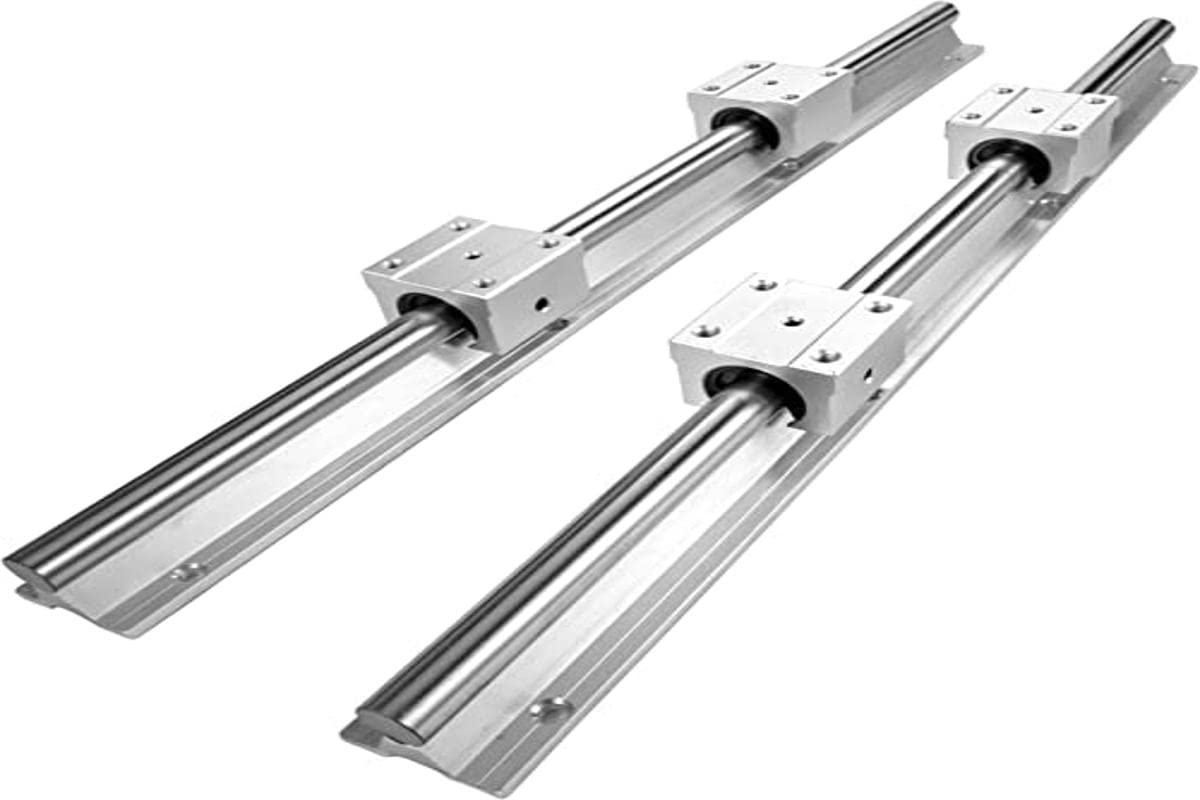
Recent Advancements in Linear Bearing Technology
Recent years have seen significant advancements in linear bearing technology, leading to improved performance, reliability, and versatility. Some notable developments include:
- Nanotechnology: The integration of nanotechnology has allowed for the development of ultra-precision linear bearings with nanometer-scale accuracy. These bearings are ideal for applications requiring extremely fine movement and positioning.
- Smart Bearings: Advances in sensor technology have enabled the creation of smart linear bearings that can monitor parameters like temperature, load, and vibration in real time. This data helps in predictive maintenance and optimizing operational efficiency.
- Materials Innovation: New materials with enhanced properties, such as self-lubricating and corrosion-resistant coatings, have extended the lifespan of linear bearings and reduced the need for frequent lubrication and maintenance.
- Compact Designs: Manufacturers are designing more compact linear bearings to suit space-constrained applications while maintaining high load capacity and precision.
- Environmental Sustainability: There’s a growing emphasis on developing linear bearings with reduced environmental impact, including using eco-friendly materials and designs that require less energy to operate.
- Integration of IoT: Linear bearings are being integrated into the Internet of Things (IoT) networks, allowing them to communicate with other equipment and systems for seamless automation and optimization.
- Magnetic Levitation Bearings: Magnetic levitation (maglev) technology is being applied to linear bearings to create frictionless movement, reducing wear and enabling smoother and more precise motion.
- Advanced Coatings: Coatings with enhanced wear resistance, low friction, and improved thermal properties are being applied to linear bearings, extending their service life in challenging environments.
These advancements have contributed to the expanding range of applications where linear bearings can be used, from aerospace and automotive industries to medical devices and consumer electronics. As technology continues to evolve, linear bearings will play a crucial role in enabling more efficient and precise motion control across various sectors.
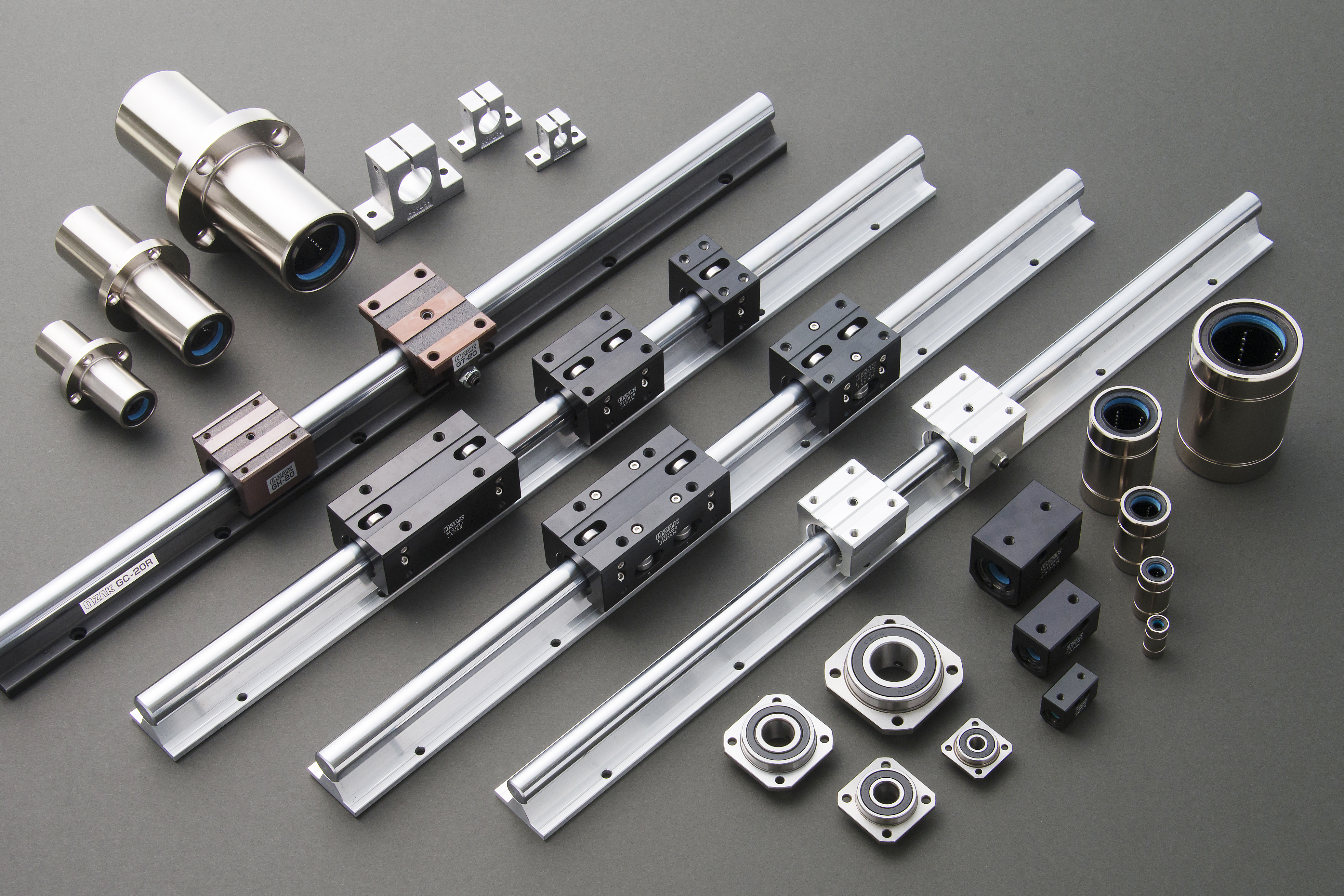
Common Applications and Industries for Linear Bearings
Linear bearings find widespread use in a variety of applications and industries due to their ability to provide controlled linear motion. Some common applications and industries where linear bearings are essential components include:
- Industrial Automation:
Linear bearings are used in automated machinery and equipment to enable precise and repeatable movement of components. They play a critical role in assembly lines, material handling systems, and robotics.
- CNC Machinery:
In computer numerical control (CNC) machines, linear bearings facilitate accurate movement of the cutting tool or workpiece. They contribute to the precision and quality of machining operations.
- Medical Devices:
Linear bearings are crucial in medical equipment such as MRI machines, CT scanners, and robotic surgical systems. Their precision and smooth motion are vital for accurate medical procedures.
- Packaging Machinery:
In packaging and labeling machines, linear bearings ensure precise movement of containers, products, and labeling mechanisms. This results in consistent and reliable packaging processes.
- Printing Industry:
Linear bearings are used in printing presses to ensure precise movement of print heads, paper feed mechanisms, and other critical components. This helps achieve accurate printing results.
- Textile Machinery:
In textile manufacturing, linear bearings contribute to the smooth operation of spinning machines, looms, and fabric handling systems. They help maintain proper tension and alignment of materials.
- Aerospace and Defense:
Linear bearings are utilized in aerospace applications such as aircraft actuators, landing gear systems, and satellite mechanisms. They withstand harsh conditions and provide reliable motion control.
- Material Handling:
In conveyor systems and material handling equipment, linear bearings facilitate the movement of goods along production lines, warehouses, and distribution centers.
- Automotive Industry:
Linear bearings are used in automotive manufacturing for tasks like seat adjustments, sunroof operation, and door mechanisms. Their precision enhances passenger comfort.
- Scientific Research:
In laboratory equipment and scientific instruments, linear bearings contribute to accurate positioning of samples, sensors, and analytical components.
These are just a few examples of the diverse applications and industries where linear bearings are essential. Their ability to provide controlled and reliable linear motion makes them indispensable in achieving precision, efficiency, and performance across various sectors.


editor by CX 2024-02-23