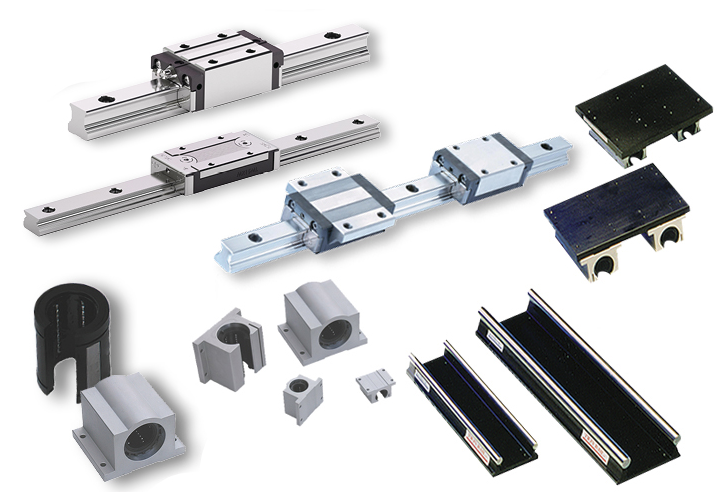
Challenges and Solutions for Addressing Friction and Wear in Linear Bearings
Friction and wear are common challenges in linear bearings that can impact their performance and lifespan. Here are the challenges and some solutions to address them:
- 1. Challenge: Friction:
Friction between the bearing components can lead to increased energy consumption, heat generation, and reduced efficiency.
- Solution: Lubrication:
Proper lubrication is essential to minimize friction. Lubricants reduce the contact between moving parts, allowing smoother motion and reducing wear. Choosing the right lubricant and applying it correctly can significantly mitigate friction-related issues.
- 2. Challenge: Wear:
Continuous movement can lead to wear on the bearing surfaces, affecting precision and performance over time.
- Solution: Regular Maintenance:
Implementing a regular maintenance schedule can help monitor wear and replace worn components before they compromise performance. This includes cleaning, re-lubrication, and periodic inspection of the bearing’s condition.
- 3. Challenge: Contaminants:
Dust, debris, and foreign particles can enter the bearing system, leading to increased friction and accelerated wear.
- Solution: Sealing and Protection:
Using seals, covers, or protective enclosures can help prevent contaminants from entering the bearing system. These protective measures maintain the integrity of the lubricant and extend the bearing’s lifespan.
- 4. Challenge: Improper Installation:
If linear bearings are not installed correctly, misalignment and uneven load distribution can contribute to friction and wear.
- Solution: Precise Installation:
Follow manufacturer guidelines for proper installation, ensuring accurate alignment and even load distribution. This reduces the risk of premature wear and ensures optimal performance.
- 5. Challenge: Inadequate Lubrication:
If the linear bearings are under-lubricated or over-lubricated, it can lead to increased friction and wear.
- Solution: Lubrication Management:
Monitor and manage lubrication levels to ensure they are within the recommended range. Regularly assess the lubricant’s condition and replenish as needed to maintain optimal performance.
- 6. Challenge: High Loads and Speeds:
High loads and speeds can increase friction and wear on linear bearings.
- Solution: Proper Selection:
Select linear bearings that are designed to handle the specific loads and speeds of the application. This ensures that the bearings can operate effectively under the given conditions.
Addressing friction and wear challenges in linear bearings requires a combination of proper maintenance practices, appropriate lubrication, protective measures, and careful selection of bearings. By implementing these solutions, the performance and longevity of linear bearings can be optimized.
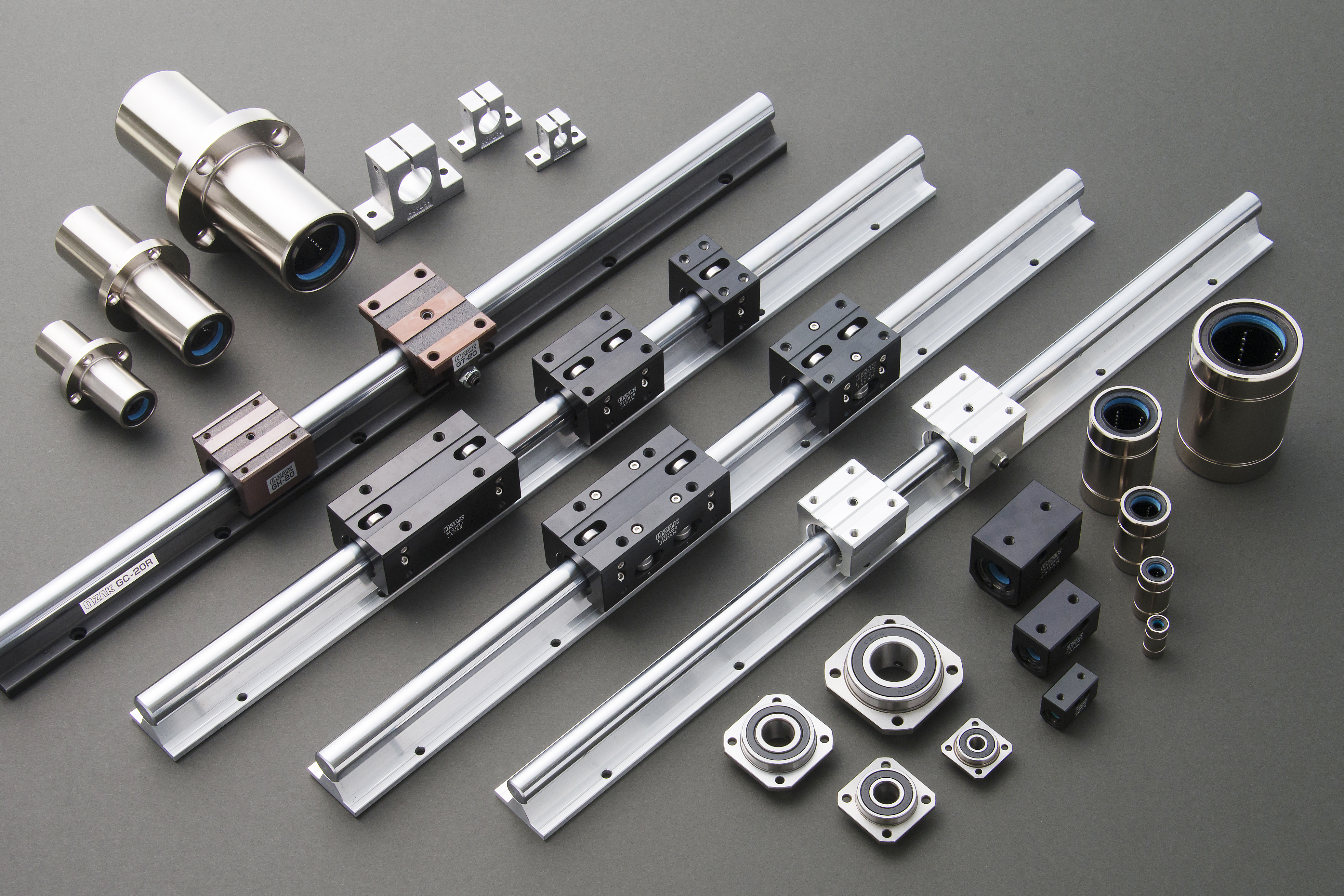
Enhancing 3D Printers and Additive Manufacturing with Linear Bearings
Linear bearings play a crucial role in the efficient and precise operation of 3D printers and additive manufacturing processes. Here’s how they contribute to these technologies:
- Precise Motion Control:
Linear bearings provide smooth and accurate linear motion control, ensuring precise positioning of the print head or build platform. This precision is essential for creating intricate and detailed 3D printed objects.
- High Repeatability:
Linear bearings offer high repeatability, enabling the printer to consistently recreate complex geometries layer by layer. This is crucial for producing parts with consistent quality and dimensions.
- Reduced Vibration and Wobble:
The smooth motion provided by linear bearings minimizes vibrations and wobbling during printing, leading to smoother surface finishes and improved print quality.
- High-Speed Printing:
Linear bearings can handle high speeds, allowing 3D printers to operate at faster print speeds without sacrificing accuracy. This is beneficial for reducing overall print time.
- Compact Design:
Many linear bearings have a compact and space-efficient design, which is important for fitting within the confined spaces of 3D printers while maintaining the required range of motion.
- Low Friction and Wear:
Linear bearings are designed to minimize friction and wear, leading to longer lifespan and reduced maintenance requirements. This is especially important in additive manufacturing where continuous operation is desired.
- Smooth Layer-by-Layer Building:
In additive manufacturing, linear bearings enable precise movement of the build platform or print head, ensuring that each layer is accurately aligned and built upon the previous layer.
- Complex Geometries:
Linear bearings enable 3D printers to create complex and intricate geometries that require precise control over the movement of the print head and build platform.
Overall, linear bearings contribute to the success of 3D printing and additive manufacturing by providing the necessary motion control, precision, and reliability needed to create high-quality and intricate 3D printed objects.
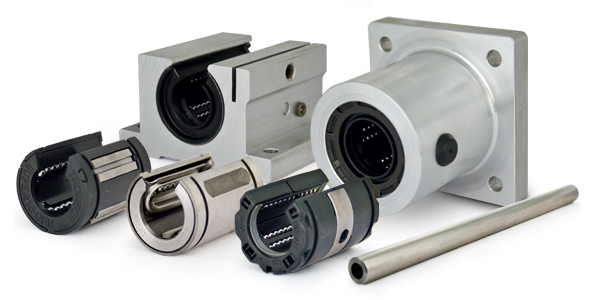
Design Principles and Functionalities of Linear Bearings
Linear bearings are designed with specific principles to facilitate controlled linear motion along a single axis. These design principles contribute to their functionalities, making them essential components in various applications:
- Rolling Elements:
Linear bearings typically feature rolling elements, such as balls or rollers, that move along a track or rail. These rolling elements reduce friction and enable smooth linear motion.
- Guiding Mechanism:
Linear bearings incorporate a guiding mechanism to constrain the motion to a single axis. This guiding mechanism ensures that the linear bearing moves precisely along the desired path.
- Load Distribution:
The design of linear bearings allows for effective distribution of loads, both in the radial and axial directions. This load distribution ensures stability and prevents excessive stress on individual components.
- Rail or Track:
Linear bearings typically run along a rail or track that provides a smooth and accurate path for the rolling elements. The rail is designed to resist wear and maintain its precision over time.
- Cage or Carriage:
Linear bearings use a cage or carriage to house the rolling elements and maintain their proper spacing. This arrangement ensures even load distribution and smooth movement.
- Sealing and Lubrication:
Linear bearings often incorporate sealing mechanisms to protect the rolling elements from contaminants and to retain lubrication. Proper lubrication ensures smooth motion and extends the bearing’s lifespan.
- Mounting Options:
Linear bearings are designed to be mounted in various ways, depending on the application’s requirements. Mounting options include flange-mounted, base-mounted, or end-supported configurations.
- Adjustability:
Many linear bearings are designed with provisions for adjustment, allowing users to fine-tune the preload or clearance to optimize performance and minimize play.
- Materials:
Linear bearings are constructed from materials that offer high wear resistance, durability, and corrosion resistance. Common materials include steel, stainless steel, and various engineering plastics.
- Accessories:
Accessories such as end caps, seals, and lubrication systems can enhance the functionality and lifespan of linear bearings by providing protection and ensuring proper maintenance.
Functionalities of linear bearings include providing precise linear motion, guiding components along a defined path, minimizing friction, distributing loads, and maintaining stability. The design principles ensure reliable operation and make linear bearings indispensable in applications requiring controlled and accurate linear motion.


editor by CX 2024-03-29